Spiga

Windows Mobile On Track For 50% Growth

Will sell 20 million units this year

Microsoft said today that it estimates its Windows Mobile software to grow at least 50 percent annually through fiscal years 2008 and 2009.

"Fifty percent growth is the minimum," said Eddie Wu, Microsoft's managing director for embedded devices in Asia, in an interview with Reuters.

Wu said Microsoft expects to sell 20 million units in the current fiscal year that ends in June. It sold more than 11 million units of its Windows Mobile software in the previous fiscal year.

"We're actually still seeing very good growth (for our mobile software) in markets like Europe and the United States," said Wu. He said the fastest growth of Windows Mobile is in Asia-Pacific, Middle East, Brazil, Russia and India.

Microsoft faces strong competition from Apple, Blackberry manufacturer Research in Motion and Palm Inc.

"Even if Microsoft is growing at a rate of 50-60 percent, it doesn't mean they can gain that much share since Microsoft and Apple's mobile operating system is still much smaller compared to the Symbian system," said Citigroup analyst Kevin Chang.

"But they (Microsoft) are one of the few players which are offering touchscreen platforms so that is helping them grow," said Chang.

Microsoft announced earlier this year that it would introduce Web browsing capabilities for mobile phones in the third quarter of this year.

11 cloud computing vendors to watch

Cloud computing looks to be a "classic disruptive technology," says Forrester Research in an interesting new report published Monday. For enterprise IT shops, cloud computing still poses some real risks, including an almost complete lack of service-level agreements and customer references, plus some genuine security and compliance concerns, according to Forrester. But even so, IT shops are tapping into cloud services for targeted projects: "There's a high likelihood that developers inside your company are experimenting with it right now," writes senior analyst James Staten in the report,"Is Cloud Computing Ready for the Enterprise?".

Which cloud computing vendors should be on your radar screen now? In its report, Forrester cites 11:

1. Akamai
2. Amazon
3. Areti Internet
4. Enki
5. Fortress ITX
6. Joyent
7. Layered Technologies
8. Rackspace
9. Salesforce.com
10. Terremark
11. XCalibre


Akamai, Amazon and Salesforce will be the most familiar to enterprise IT. Akamai offers application performance services that speed up apps for users of cloud services, while Amazon offers the Amazon Elastic Compute Service (EC2) and storage in the cloud. Salesforce is pushing hosted apps and what it calls Platform as a Service, to help developers create new software in the cloud.

Terremark, Layered Technologies, XCalibre and startup Enki all play more behind the scenes in the hosting business that fuels and manages the cloud.

Also prominent at the moment is 3Tera, maker of AppLogic, which Forrester describes as "cloud computing infrastructure software" and a "grid engine." Basically, this is enabling software that lets a hosting provider put customer software in the cloud with a minimum of fuss, for starters. AppLogic works on physical servers and virtualized ones, enables cost-based reporting, and runs many applications "without redesign or reprogramming to a grid API," among other benefits, Forrester notes. Check out the report for more details on all the vendors and Forrester's take on the competitive landscape.

Mobile next battleground for Linux

The co-founder of one of the most popular mobile Linux platforms has predicted a "revolution" in the use of open-source software on phones and handheld devices.

Trolltech's Eirik Chambe-Eng told delegates at the Open Source Business Conference in London that Linux is set to "make a lot of headlines going forward on embedded devices and mobile phones".

"We believe we are just now at the beginning of a revolution," he said on Wednesday, citing what he called the five Cs--complexity, control, customisation, cost and community--as motivating factors for manufacturers to switch to Linux.

"Linux gives manufacturers and OEMs (original equipment manufacturers) complete control," said Chambe-Eng, who also claimed that Windows Mobile and Symbian--Linux's two great competitors in the mobile phone market--come with "agendas attached".

"Manufacturers are scared of Microsoft coming in and pushing margins away from the hardware. There are very thin margins in this business, and Symbian and Windows Mobile are typically expensive," he said.

Chambe-Eng claimed that the sale last year of Siemens' handset unit to BenQ was an example of a company giving up due to the "headaches" caused by proprietary operating systems, saying: "Software complexity today has become the Achilles' heel of the mobile phone industry".

Nokia's use of Linux in its 770 Web tablet is a tribute to the scalability and configurability of open source platforms, said Chambe-Eng.

While Linux had a lot to offer in comparison to proprietary systems, such as improved scalability and flexibility, it is lacking in other areas, according to industry watchers.

Ovum telecoms analyst Tony Cripps said that Linux-based smart phones are currently inhibited by the lack of a standardised application environment for third parties to write to, unlike Symbian's offerings.

Also, the hardware specifications required by Linux are still too high to make it a sensible proposition for lower-end phones, according to Cripps. "The hardware requirements of Linux need to come down to the point where it becomes a simple equation around numbers, where it's financially more viable to do it with Linux," he said.

But a recent alliance between handset manufacturers and network operators, including Vodafone, could be a step toward making Linux more viable. "Once a carrier like Vodafone, which has absolutely massive spending power for procuring terminals, says it's interested in a standardised environment based around Linux, then you've got to take it seriously, even though they haven't really elaborated on how they're going to do this," said Cripps.

Linux has recently seen its popularity as a smart-phone platform rise dramatically in the Asian market, but Chambe-Eng also predicted a great deal of success for the forthcoming Rokr E2 music-centric handset, the first Linux-driven handset to be properly marketed in Europe.

The Rokr E2 is Motorola's independent follow-up to the Rokr E1, an iTunes-sporting collaboration with Apple that saw poor sales due to limited storage.

Norwegian software house Trolltech produces an application platform called Qtopia, for embedded devices. Qtopia is in turn based on the company's Qt platform, which has been used to develop applications as diverse as Google Earth, Skype, the Opera Web browser, Adobe Photoshop Elements and space flight simulation modules for NASA.

Google outlines Web development investments in three areas

To encourage the creation of more Web-based applications during the next several years, Google will invest in three key areas for developers, including opening up its servers to host their applications, encouraging pervasive connectivity to the Web, and making the browser more powerful, says Vic Gundotra, Google's vice president of engineering, who the led opening keynote speech at this year's Google Developer Conference at the Moscone Center in San Francisco.

"Google was born in the era of the Web," Gundotra says. "It's the only platform we've known. It was a platform that was formed by consensus. It was all of us collectively that agreed to a few standards. We feel a debt of gratitude toward that community."

Gundotra conceded that Web developers working atop Google-provided development tools and servers would lead to remunerative opportunities for the Mountain View, Calif.-based giant. "As the Web gets bigger and enables better Web apps, it attracts more users. For us, more users means more Google searches, which leads to more revenue. But the money we make will get dumped back into the platform."

Here's a summary of Google's investment plans (though they never specified dollar amounts):

1. Making the Cloud More Accessible

Google will open up the Google data centers so that developers can more easily scale their applications. This means that developers will still create their app locally on their machines and test it, but once it's ready, they can deploy it to millions of users, according to Gundotra.

This will be done using the Google App Engine. Kevin Gibbs, Tech Lead for the Google App Engine, told the audience that the product would be free for up to five million page views a month. After that, a price plan will be worked out involving metrics such as page views, storage and CPUs.

2. Keeping Connectivity Pervasive

Google believes the mobile revolution will improve connectivity, and it's betting on its Android platform to be the central place for development on top of the mobile Web. Gundotra says the various mobile platforms (such as Windows mobile, Apple's SDK, and RIM's BlackBerry platform) are "too fragmented." In his view, an open source, mobile stack can centralize mobile development, which Google believes will be embodied by Android.

During the presentation, Steve Horowitz, Android's engineering director, displayed the Android platform's capabilities on a touch screen phone. These included some of Google's basic apps, such as Gmail and calendaring, and a more complex Google Maps feature called street view, which allows users to see pictures of streets in major cities.

3. Make the Client (Browser) More Powerful

Google believes its Gears plug-in (which allows people to take Web apps offline and utilize the power of their desktop) and HTML 5 represent the future of the Web-browser. By using these tools to extend the capabilities of JavaScript, Gundotra says, Web apps can become more powerful and more rich.

Google releases Google Earth plug-in and API

Google is looking to expand the reach of Google Earth with a new browser plug-in and API released Wednesday that allows developers to infuse 3-D geographic views into Web applications.

The new tools will let users "fly" over different venues on Earth or access other features of Google's digital globe without having to run the client installation of Google Earth. Google hopes the plug-in and API will make Google Earth as popular among developers as the company's Google Maps application, whose API now runs on more than 150,000 sites, noted Paul Rademacher, technical lead for the Google Earth plug-in and API.

"We recognize that there are tens of thousands Map API sites," he said. "We want those to all be 3-D enabled very easily, so we're making it possible for existing sites to be 3-D enabled with a single line of JavaScript code. What's been missing [in Google Earth] is the ability for developers to use Google Earth inside their own Web pages. Now inside a Web page you'll be able to fly through San Francisco or see a 3-D model of a cabin with exactly the view out the window of the mountains."

Rademacher said he expects Google Earth to be particularly popular on real estate sites so people can get a 3-D view of houses and on travel sites where consumers can see the view from a hotel room.

Google said key features of the API include:

-- The ability to embed Google Earth inside any Web page with only a few lines of code;

-- A JavaScript API to enable rich Earth-based web applications;

-- Support for manipulating KML and the 3-D environment to create polygons, lines and placemarks;

-- The ability to view the thousands of existing 3-D buildings, or add a developer's own 3D models; and

-- Support for switching to Google Sky mode for high-resolution imagery of stars, planets, and galaxies.

Google made the Google Earth announcement in conjunction with its Google I/O developer conference that got underway Wednesday in San Francisco.

"This is a relatively rare example of Google releasing a new technology to developers first," Rademacher noted. "Now we're very comfortable with the fact that developers do great things when you give them a new tool."

Top 10 Video Players for Linux

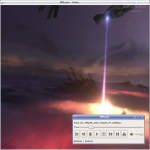
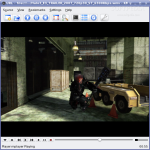
Review imageMPlayer – Every time I give MPlayer the deep six, in search for a better multimedia player, I eventually end up "embracing" it again, and thinking that I'll never let it go. MPlayer is, was and will be the best video player Linux ever had. Even if the default user interface is old and needs to be rewritten, it can play anything you want, even the latest Windows Media Video in 720p and 1080p video streams. It is also the base for many projects that you can find on the big download websites.


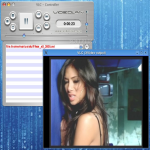
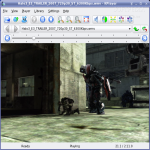
Review imageVLC – Being able to decode almost any video stream by itself, VLC, this cross-platform media player and streaming server, deserves the second place on my favorite video player applications list. It is a highly portable multimedia player for various audio and video formats such as MPEG-1, MPEG-2, MPEG-4, DivX, mp3, ogg, DVDs, VCDs, and various streaming protocols.


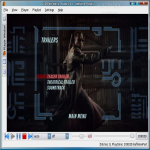
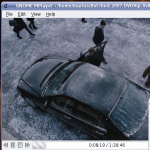
Review imageKaffeine – It’s the default media player for many KDE-based Linux distributions you can find these days. But being based on the xine engine, it lacks a few modern features and I had some problems with HD videos. Moreover, the interface has no more than 4 useless (for me) settings; the only real configuration you can make is for the xine engine, but you have to know what you're doing when you play with those settings.


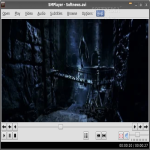
Review imageSMPlayer – Even if it's new, SMPlayer's charm has enraptured me and wins the forth place on my favorite video player applications list. It tries to be a complete front-end for MPlayer, and, until now, it did a very good job by providing features you can't find in other MPlayer front-ends; for example, it remembers the settings of all the files you play.


Review imageKMPlayer – This was and will be one of my favorite multimedia front-ends, because it integrates very well the mplayer and xine engines and it supports the GStreamer engine as well. It's very fast, light and it integrates very well with Konqueror web browser, in order to play embedded content. It also plays and records TV streams.


Review imageKPlayer – Not so popular, this one is an MPlayer powered multimedia player for the K Desktop Environment that can easily play a wide variety of video/audio files and streams using a rich, powerful and friendly interface that follows KDE standards. I recommend this video player to all the Linux beginners out there.


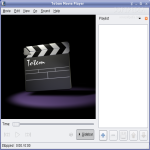
Review imageTotem – Some will agree with me, others will not, but the GNOME desktop deserves a better video player than Totem. Not only does it lack many features, but it does not even let you setup the xine backend like GXine, Kaffeine and KMplayer do.


Review imageGNOME Mplayer – Yet another GUI (graphical user interface) for MPlayer, only this time is for GNOME users. It provides a simple and very easy to use user interface for the best video player Linux ever had, MPlayer. If you're a Linux newbie, than you should definitely give this application a try.


Review imageGXine – It's the official GUI (graphical user interface) for xine. It plays back CDs, DVDs, and VCDs. It also decodes multimedia files like AVI, MOV, WMV, and MP3 from local disk drives, and displays multimedia streamed over the Internet. But the interface is very old and hard to use.


Review imageMplayerXP – I bet not many of you knew about MplayerXP, which is a branch of the powerful mplayer multimedia player, but based on the new (thread-based) core. The new core provides better CPU utilization and excellently improves performance of video decoding. The main goal of MplayerXP is to get monotonous CPU loading during movie playback. Unfortunately, this player doesn't have a GUI front-end as far as I know.

Red Hat: Enterprise Linux 5.2

Linux vendor Red Hat has updated its enterprise Linux version with features for big servers and some green improvements. Red Hat Enterprise Linux 5.2 includes virtualisation support for bigger systems and more memory architectures.

The new version supports up to 64 CPUs and 512GB of memory, and can virtualise across non-uniform memory access (NUMA) systems. It also has new drivers to improve support for x86/64, Itanium, IBM Power and IBM System Z.

Linux vendors are addressing the issues of energy efficiency and virtualisation, in parallel, in their community ("free") releases and commercial supported software. Red Hat updates its enterprise version twice a year, and recently delivered Fedora 9 for the free community.

Novell recently previewed version 11 of its Suse Linux Enterprise Server, and delivered a second service pack to version 10 of the operating system this week. This, like Red Hat's new version, tweaks virtualisation and hardware support.

Red Hat Enterprise Linux 5.2 has green improvements that should reduce power consumption. It supports CPU frequency scaling in virtualised environments, and includes support for Intel's Dynamic Acceleration Technology, which can idle or, as Red Hat describes it, "quiesce" CPU cores. The system can also overclock busy cores to get more work out of them within safe thermal levels, Red Hat said.

On the desktop, it has better support for laptop hibernation and updated versions of OpenOffice (2.3) and Firefox (3).

"Today's availability of Red Hat Enterprise Linux 5.2, with its many technology enhancements, re-emphasises the value that we offer to customers through our subscription model," said Scott Crenshaw, vice president, Enterprise Linux Business at Red Hat. "These new capabilities should allow managers to extract more value out of their IT budget."

Red Hat Enterprise Linux 5.2 is available automatically to customers with a Red Hat Network subscription.